Research Publications

My publications and reports, each linked with accompanying PDFs, preprints, and/or news pieces. See my CV for full list of publications and see here for my Research Themes.

Written by Oliver C. Stringham

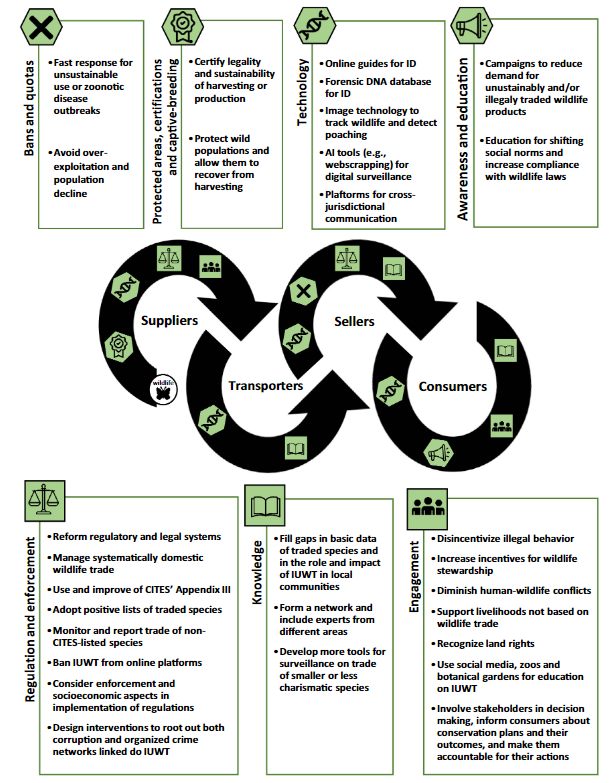
Challenges and perspectives on tackling illegal or unsustainable wildlife trade

Illegal or unsustainable wildlife trade (IUWT) currently presents one of the most high-profile conservation challenges. There is no “one-size-fits-all” strategy, and a variety of disciplines and actors are needed for any counteractive approach to work effectively. Here, we detail common challenges faced when tackling IUWT, and we describe some available tools and technologies to curb and track IUWT (e.g. bans, quotas, protected areas, certification, captive-breeding and propagation, education and awareness). We discuss gaps to be filled in regulation, enforcement, engagement and knowledge about wildlife trade, and propose practical solutions to regulate and curb IUWT, paving the road for immediate action.
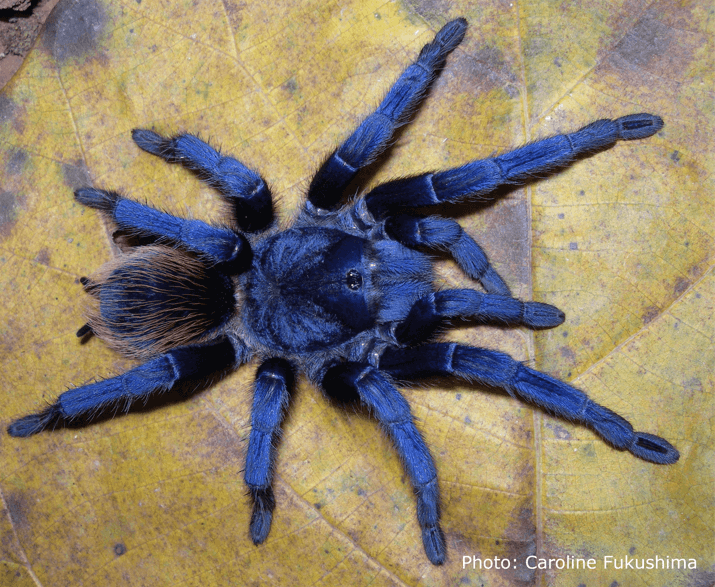
By Caroline S. Fukushima et al. (including Oliver C. Stringham) in Research

October 13, 2021

Scientists' warning to humanity on illegal or unsustainable wildlife trade

Illegal or unsustainable wildlife trade is growing at a global level, threatening the traded species and coexisting biota, and promoting the spread of invasive species. From the loss of ecosystem services to diseases transmitted from wildlife to humans, or connections with major organized crime networks and disruption of local to global economies, its ramifications are pervading our daily lives and perniciously affecting our well-being. Here we build on the manifesto ‘World Scientists’ Warning to Humanity, issued by the Alliance of World Scientists. As a group of researchers deeply concerned about the consequences of illegal or unsustainable wildlife trade, we review and highlight how these can negatively impact species, ecosystems, and society. We appeal for urgent action to close key knowledge gaps and regulate wildlife trade more stringently.

By Pedro Cardoso et al. (including Oliver C. Stringham) in Research

October 8, 2021

Dataset of seized wildlife and their intended uses

We compiled a dataset consisting of all the species involved in the illegal wildlife trade along with the reason (i.e., use-type) they were being traded. In total, the dataset includes c. 4.9k distinct taxa representing c. 3.3k species and contains c. 11k taxa-use combinations from 110 unique use-types. Our dataset can be used to conduct large-scale broad searches of the Internet to find illegally traded wildlife.

By Oliver C. Stringham, Stephanie Moncayo, Eilish Thomas, Sarah Heinrich, Adam Toomes, Jacob Maher, Katherine G.W. Hill, Lewis Mitchell, Joshua V. Ross, Chris R. Shepherd, Phillip Cassey in Research

July 20, 2021

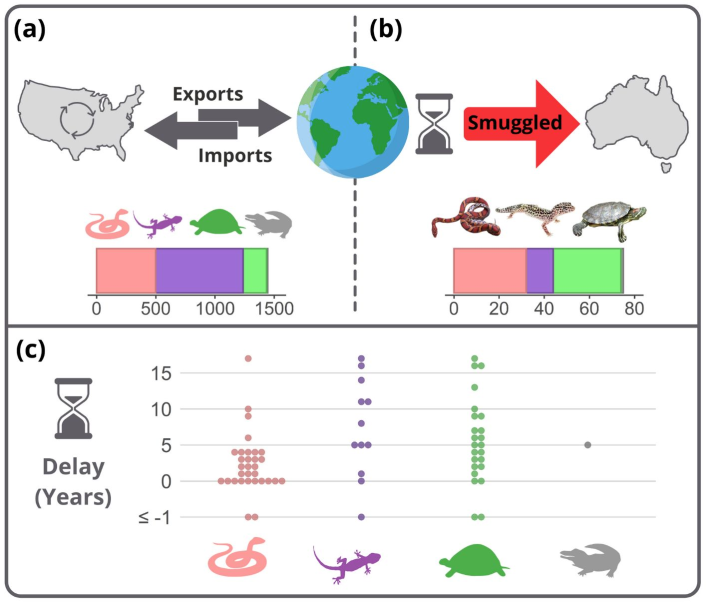
Reptile smuggling is predicted by trends in the legal exotic pet trade

We found a pattern between US reptile trade and smuggling of live reptiles to Australia. Almost all species smuggled to Aus are legal in US trade and are popular We compared illegal smuggling of reptiles into Australia to the legal pet trade of reptiles in the US. We provide the first empirical risk watch-list for desirable reptile species being trafficked into Australia. Our findings give insight into the drivers of illegal wildlife trade and our approach provides a framework for anticipating future trends in wildlife smuggling.

By Oliver C. Stringham, Pablo García‐Díaz, Adam Toomes, Lewis Mitchell, Joshua Ross, Phillip Cassey in Research

July 15, 2021

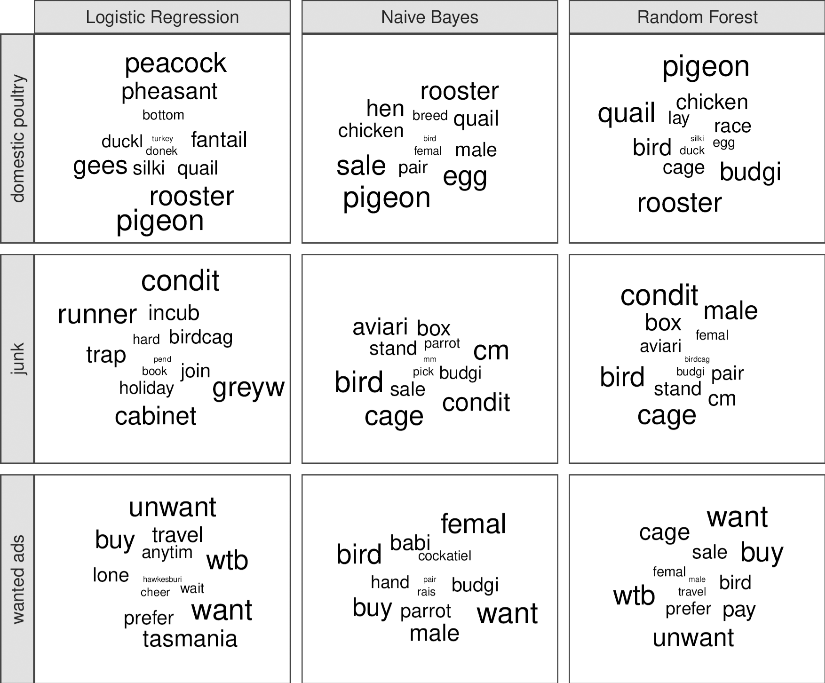
Text classification to streamline online wildlife trade analyses

The Internet can be vast source of data for the wildlife trade. However, data collected from the Internet is often numerous and messy, making data cleaning a task the requires a lot time and effort. Here, we tested if text classification can be used to speed up the process of data cleaning in relation to online data collected on the wildlife trade. We found that text classification models can predict with great accuracy relaxant advertisements, including the taxonomy of relevant species, using the text found in online advertisements. We recommend using text classification as a method to make data cleaning more efficient. Future efforts should try to pair text classification with image classification for improved efficiency.

By Oliver C. Stringham, Stephanie Moncayo, Katherine G. W. Hill, Adam Toomes, Lewis Mitchell, Joshua V. Ross, Phillip Cassey in Research

July 9, 2021